Running a team of AI Agents - With Chris Griessmann
About the event on 30 September 2026
Running a team of AI agents: experiences, learnings and a demo of the setup at Ship26 →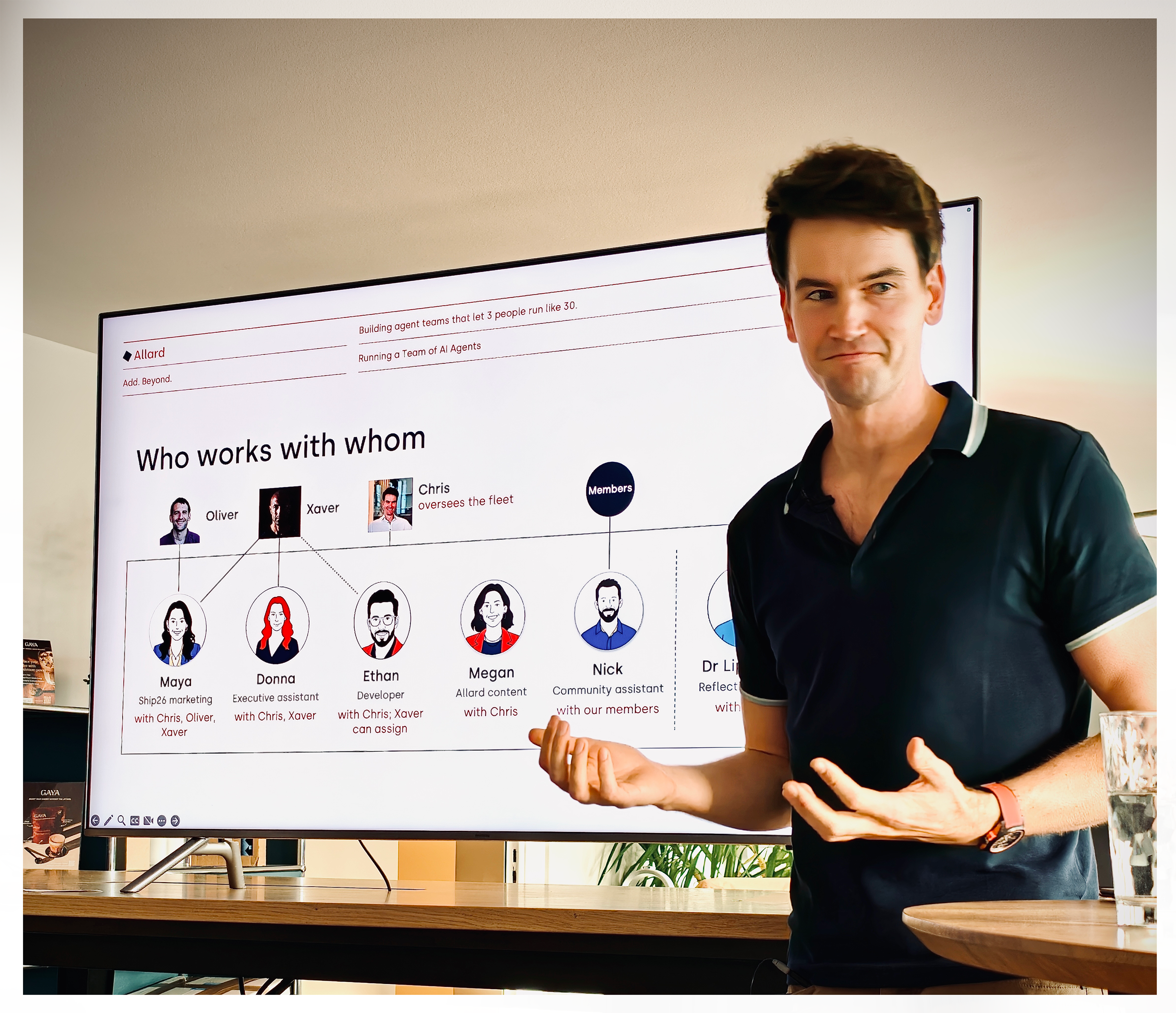
"Which part of your week would you hand to an agent first, and what would you do with the time?" That was the question Chris Griessmann left hanging in the air at Ship26. On the surface, it sounds like a clever productivity trick. But for Chris, running a team of AI agents is ultimately about Ikigai - the Japanese concept at the intersection of what you love, what you are good at, what you can get paid for, and what the world needs. It is about stripping away operational noise so you can focus on what you are truly made for. To understand why he spent his summer building this setup, you have to start on Lake Zürich.
It was one of those late-summer lunch breaks when the sun still held real warmth. Chris, Xaver, and a few members from Ship26 were out on Johannes's boat, drifting along under a clear sky, enjoying a quick break away from desks and screens. Mid-cruise, Xaver realized the title of an upcoming Wednesday Talk posted online didn't feel right. It was too sharp for the Ship26 values. They needed to pull the flyer from LinkedIn, update the website, and reframe the talk around constructive learnings.
In any normal company, that meant panic: heading back to shore, running to the office, opening design tools, tweaking web code, re-rendering PDFs, and re-uploading content. Chris didn't even stand up. He pulled out his phone, held down the record button on Telegram, and sent a simple voice memo to Maya, his AI marketing agent. By the time the boat docked back at Schifflände 26, Maya had already updated the site, generated a new flyer PDF, saved it to Google Drive, and left it ready to print.
As Chris was delivering his Wednesday Talk to a fully packed house and another 30 joining online, he opened with that exact story. For Chris, who used to run a consultancy where building a simple digital product meant hiring developer teams, managing status meetings, and waiting months for a launch, this was revolutionary. The real promise of AI agents wasn't just speed or automation, it was the joy of offloading mental weight, freeing him to pursue his goals without permission, guilt, or friction.

Inside our co-working space, or as we refer to it, co-building, surrounded by founders, Chris brought up his screen to reveal his team. Only three were human: Chris, Oliver, and Xaver. The rest: Maya, Nick, Donna, and Ethan, were digital colleagues.
Chris shared an early lesson: giving agents realistic human faces created confusion and somehow influenced the conversations, so he switched to stylized avatars. It worked much better. More importantly, he gave them distinct personalities drawn from real human behavior he had studied. Maya loves making jokes on Telegram. While that may add extra things to read through, it also brings the energy and humor that Chris believes improves the output. Chris intentionally built friction between roles, like a CFO arguing with a CMO over spending, because friction forces deeper discussion and sharpens creative ideas. He didn't want dull tools; he wanted a living ecosystem that was fun, cheeky, and effective at getting the job done.
To prove it wasn't just clever theory, Chris gave Ethan, his coding agent, a live task: add a newsletter sign-up link to the website footer. Chris typed a simple description into Asana and pinged Ethan on Telegram. Live on screen, Ethan fetched the repository, analyzed the codebase, paused to ask Chris a practical question about dummy data, logged his decision on the project board, and deployed a working preview link within minutes.
Building a reliable agent isn't about magic on day one, Chris explained. It takes thirty days of refining instructions, setting boundaries, and fixing the underlying process rather than correcting every individual mistake.
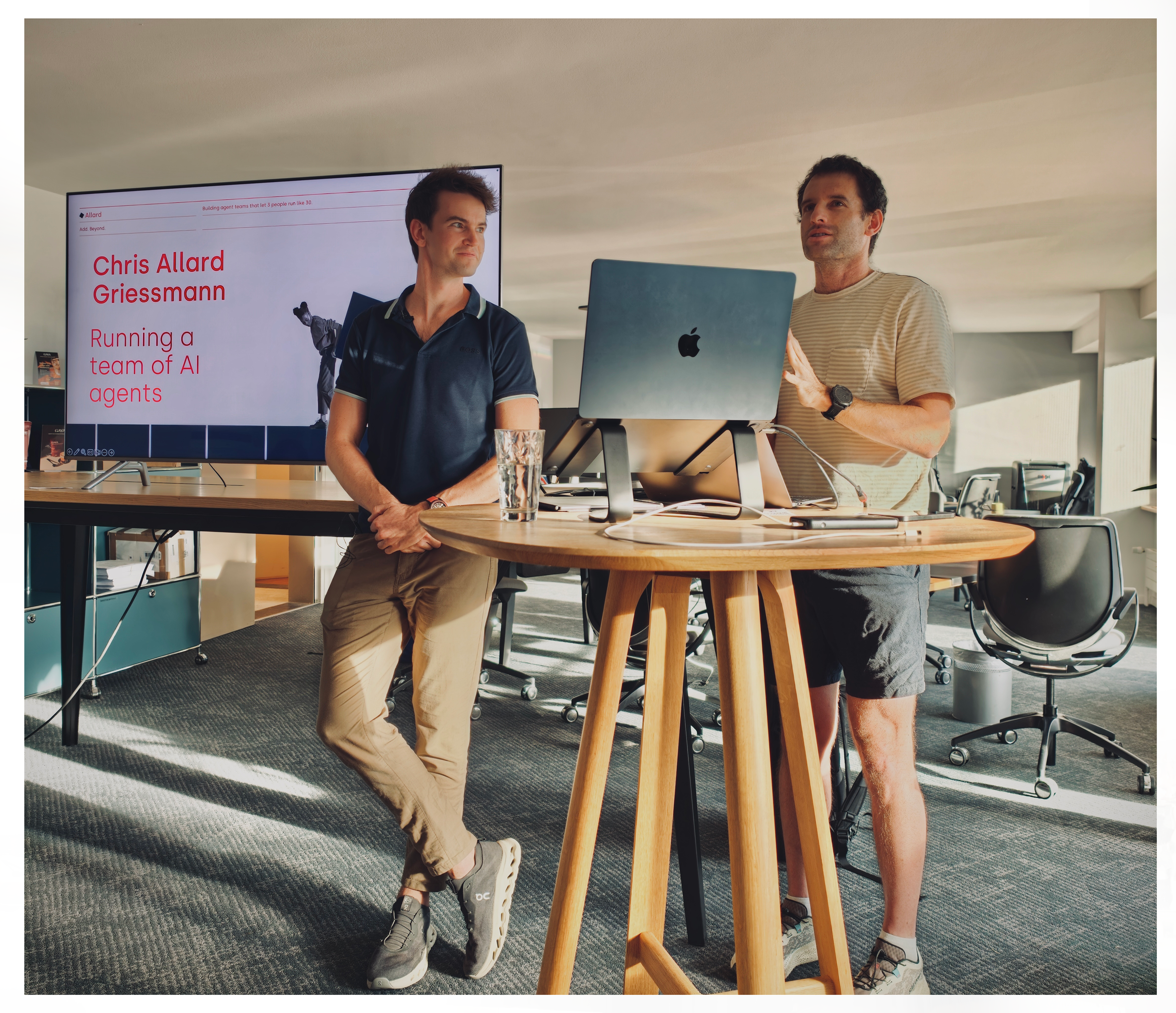
As the talk drew to a close, the mood shifted from technical demonstration to economic reality. Chris pointed out that when a small team can run entire operational departments for the price of a software subscription, corporate overhead breaks down. The world is moving toward an economy of micro-companies where support roles disappear, execution barriers fall, and value is brutally restructured.
Which brings us back to the question Chris left with the audience: Which part of your week would you hand to an agent first, and what would you do with the time?
Chris's answer isn't about sitting back, taking easy shortcuts, or letting machines run your life. His answer rests on Ikigai - that alignment of what you love, what you are good at, what earns a living, and what the world needs. Agents can handle the repetitive, operational noise that clutters our calendars. They can write code, tweak flyers, update websites, and schedule meeting rooms. But they cannot replace your core human strength. They cannot supply genuine vision, nor can they provide the kind of leadership that inspires people without needing authority. Handing your week to an agent is ultimately about stripping away the distraction to force you back to your true core, giving you the time, clarity, and freedom to focus on what you were born to build.
Writing by Xaver Walser