Your spending ratio decides when you stop working
About the event on 12 August 2026
Introduction to investing: how to build your personal wealth without selling your time →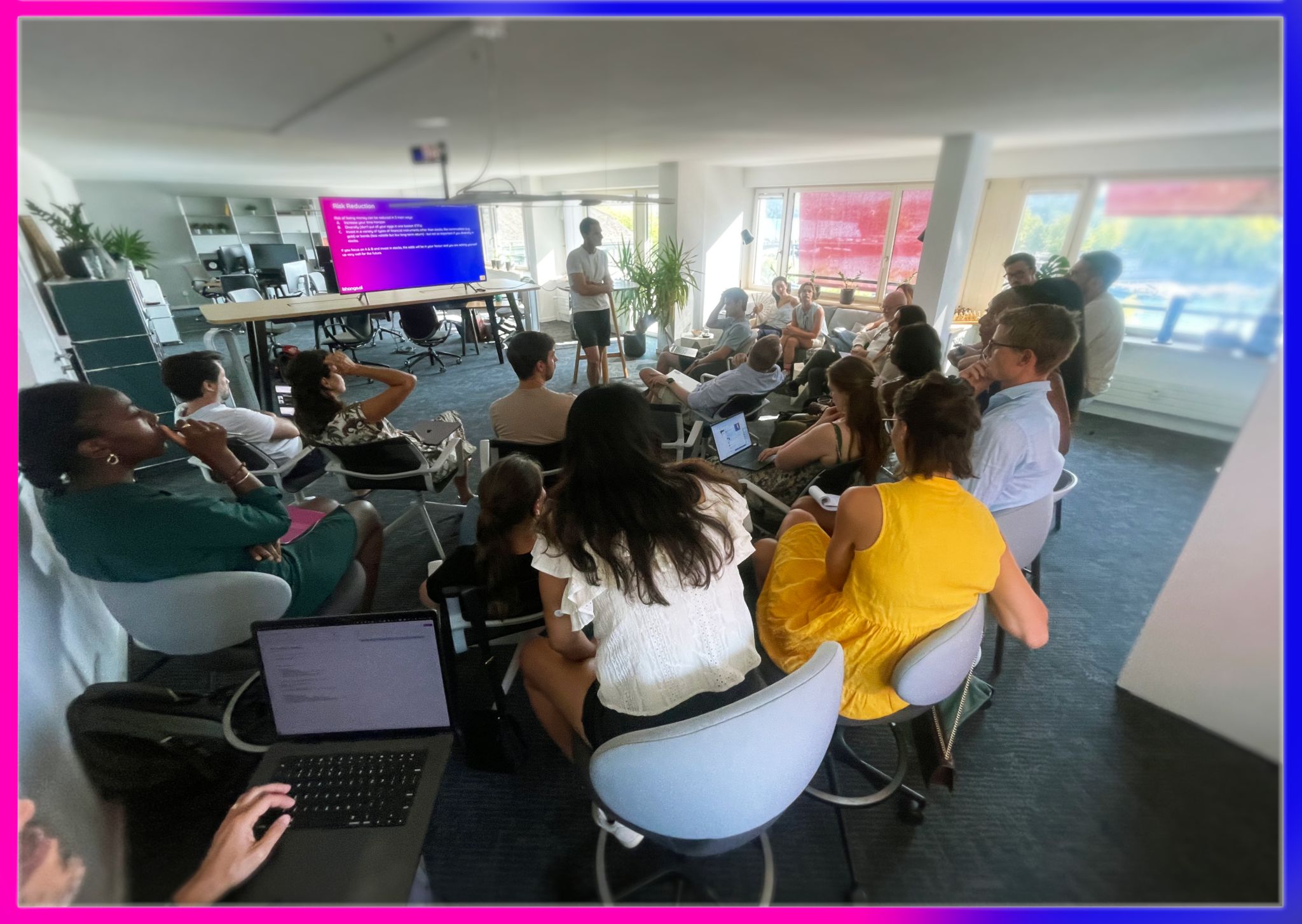
Imagine you are sixty. You have put money aside every month since you were thirty and never missed one. Then you meet someone who earned what you earned and saved what you saved, and has three times what you have. Nothing separates you but where the money sat.
On a Wednesday evening in August, Oliver Angélil stood up at Ship26 on the Limmat and showed the room where that gap comes from, then showed them the three ETFs he holds himself.
Why you should not trust him, and why you should
No training in finance, no certifications, nothing on his CV that says expert. Then the reason to listen anyway: "I don't want to make any money from you." No fund to sell, no fee to earn, no conflict of interest sitting behind the advice. Ten years of putting his own money into ETFs, and everything that went up on the screen was what he does with it.
Four ways to make money, and only one that doesn't need you
A job, where you sell forty hours a week and cannot sell many more than that. A services company, where you sell your people's hours as well as your own. A product business, where you build one thing, copy it cheaply, then compete with the world. And passive investing: two hours to open a brokerage account, ten minutes every few months after that.
The fourth differs from the other three in the place that matters most, which is who carries it. In the first three, you do: your performance review, your go-to-market, your competitors. In the fourth you hand the work to the CEOs of the largest companies on earth, and accept with some humility that they are better at growing companies than you are.
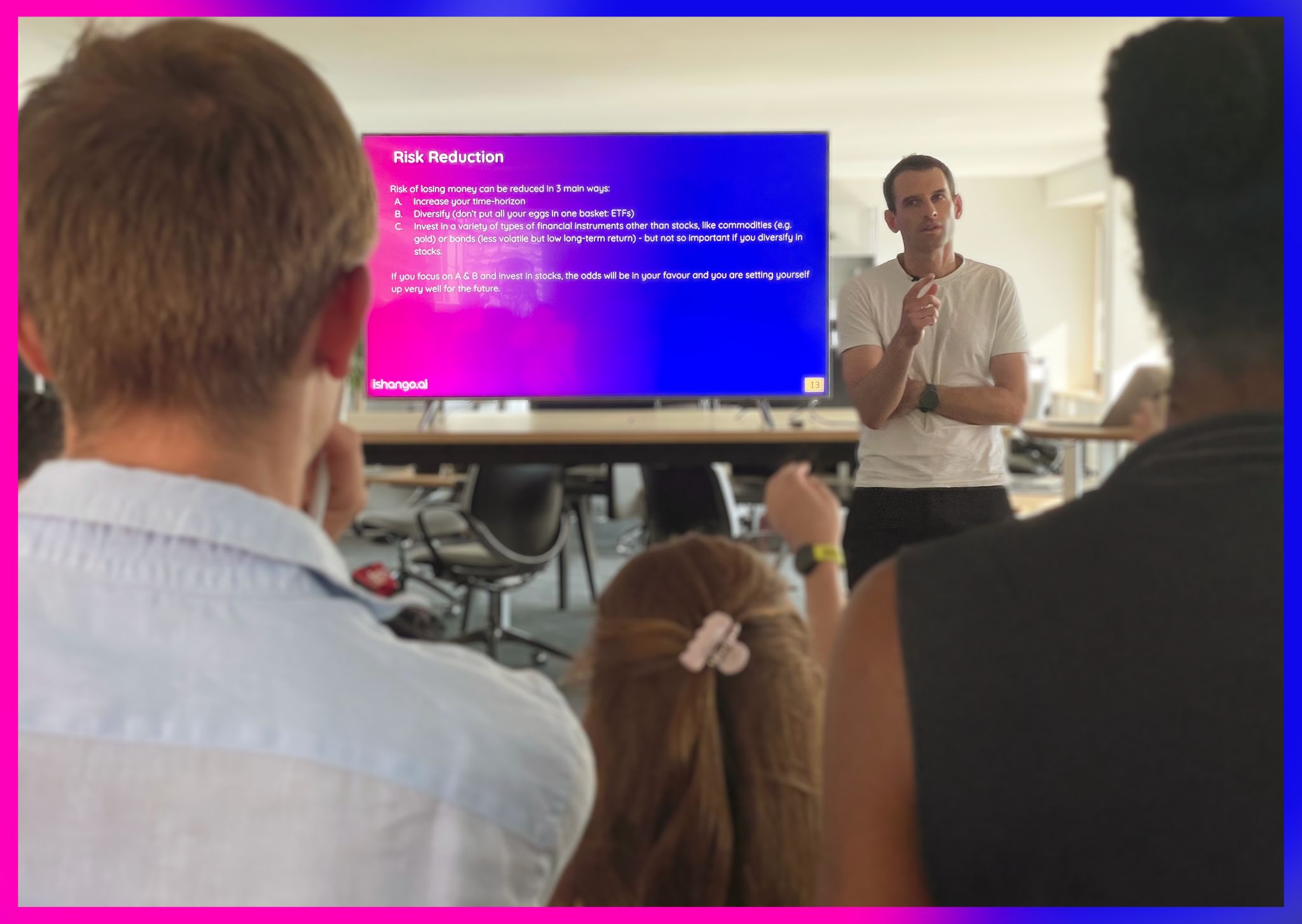
Emily and Inka, thirty years apart
Both are thirty, both earn 100,000 francs, both spend 70% of it, both set aside 30,000 a year. Emily's goes into a low-cost ETF. Inka's stays in the bank. Thirty years later Emily has 2.8 million francs and Inka has just under one. One line curves, the other is straight.
Then the version that catches careful people. Oliver ran Emily again through a big bank charging 3% a year instead of a broker charging 0.1%, and more than a million francs left the account in fees she would never have watched go.
The date is set by what you spend, not by what you earn
Bling Bling Blake earns 500,000 a year and spends 70% of it: the car, the Rolex, the Gold Coast. Poor Pete earns a fraction of that and puts away 12,000. Blake ends up with more money. Pete stops having to work first, because the date is set by the spending ratio, not the salary. Twenty-five times your annual cost of living is the number you need invested, and it walks toward you every time you spend less. The idea that investing is for the rich, Oliver said, is "nonsense, absolute nonsense".
His own portfolio, after all of it, is three ETFs.
The presentation ended. The evening didn't.
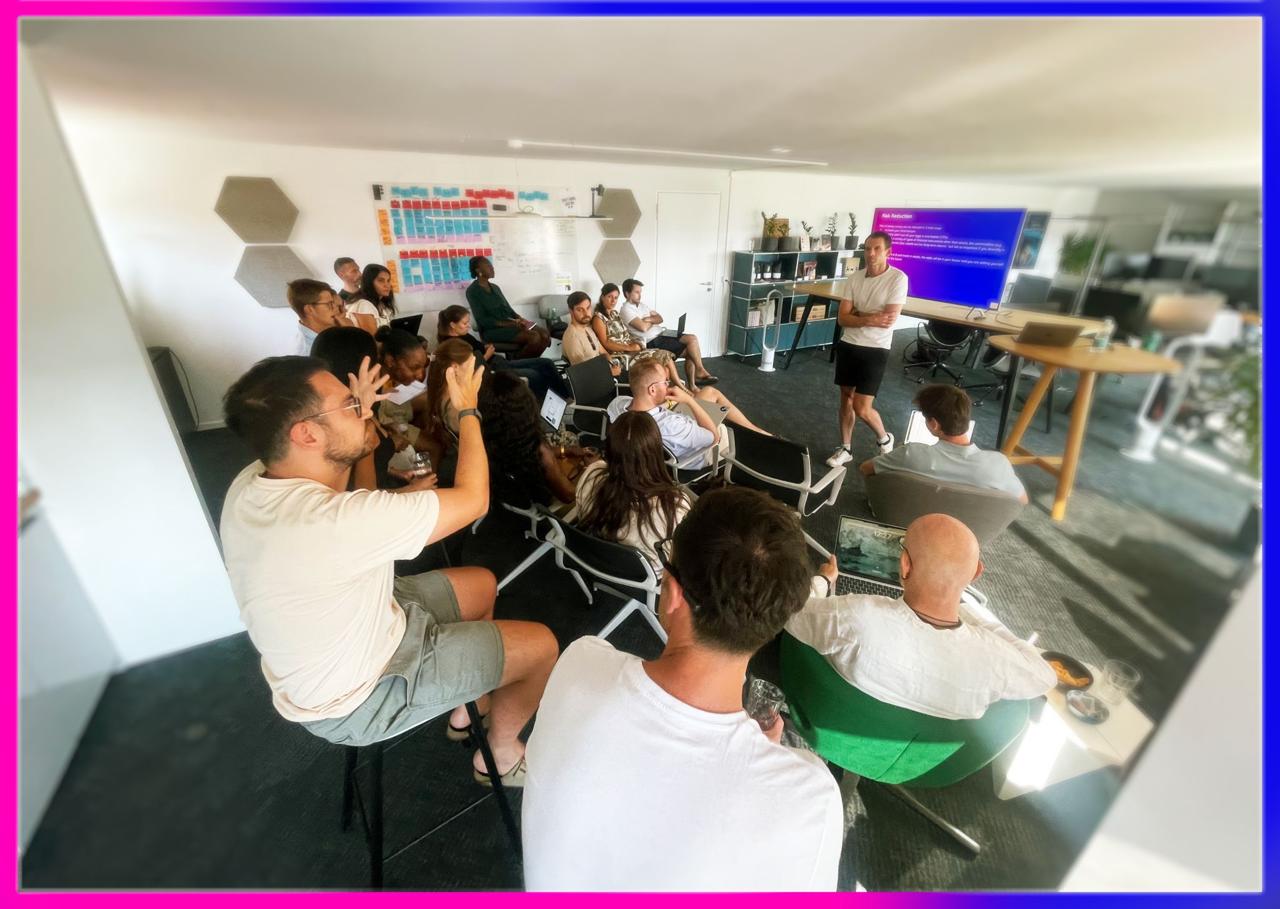
The room kept him another hour on property, on startups, on the franc against the dollar, and somebody made the case for buying after a crash. Oliver granted the psychology and held his line: you can never see to the right-hand side of the chart.
The financial industry has an interest in this looking harder than it is, he reckons. Which is why the useful thing is to say it out loud, in a room, with people you trust.
That happens here every Wednesday at 17:00. This one is on the event page; what's coming up is on /events.