Global Perspectives at the Ship: China
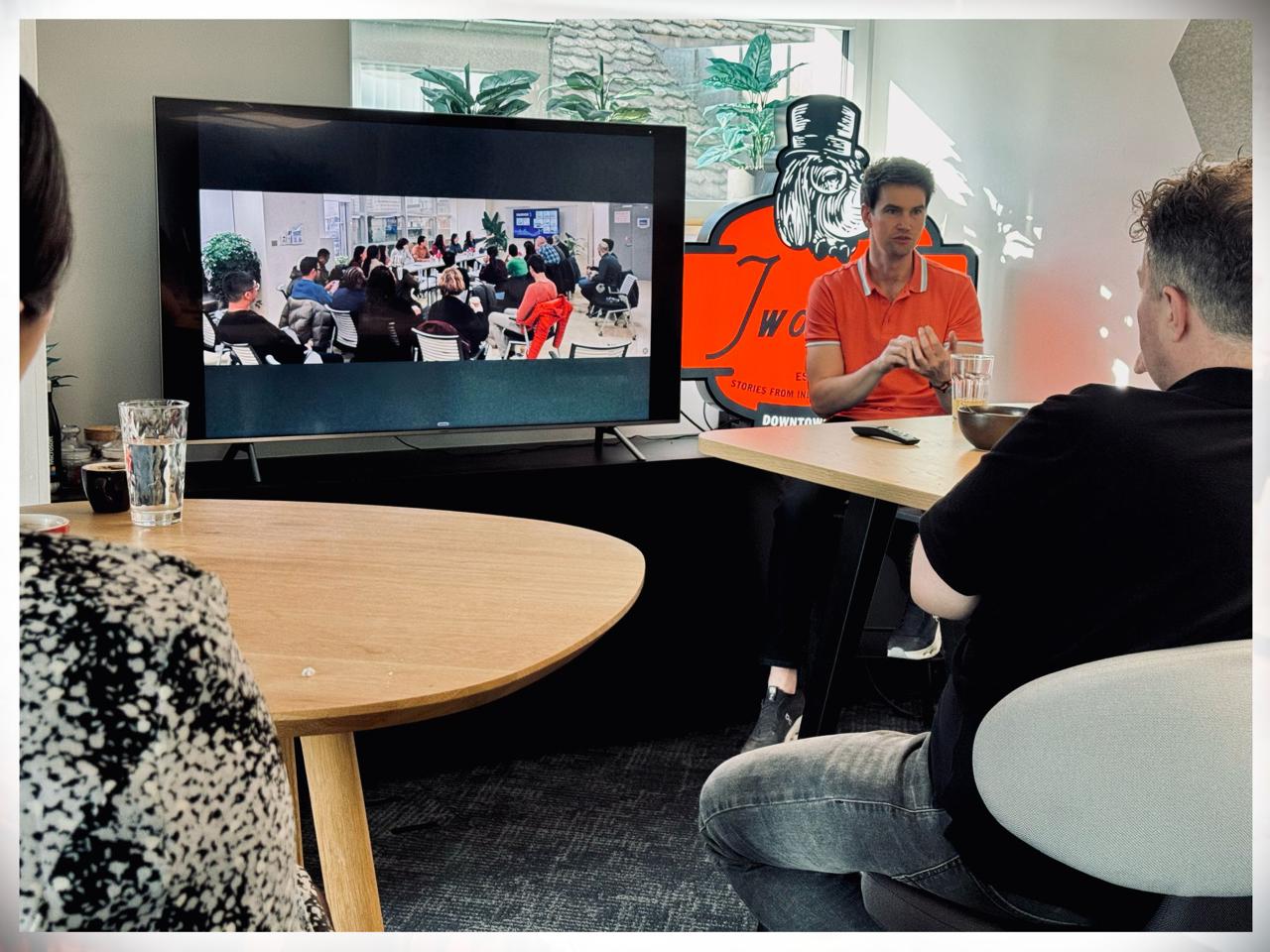
A simple presentation turned into something bigger about global perspective. Chris opened with a week in Shanghai and Hangzhou: the scale of it, the shift in mindset, the cultural differences that feel worlds apart from how we live in Europe. He'd framed the evening as informal, drinks in the fridge, not a strict program, tangents welcome. The room took him at his word.
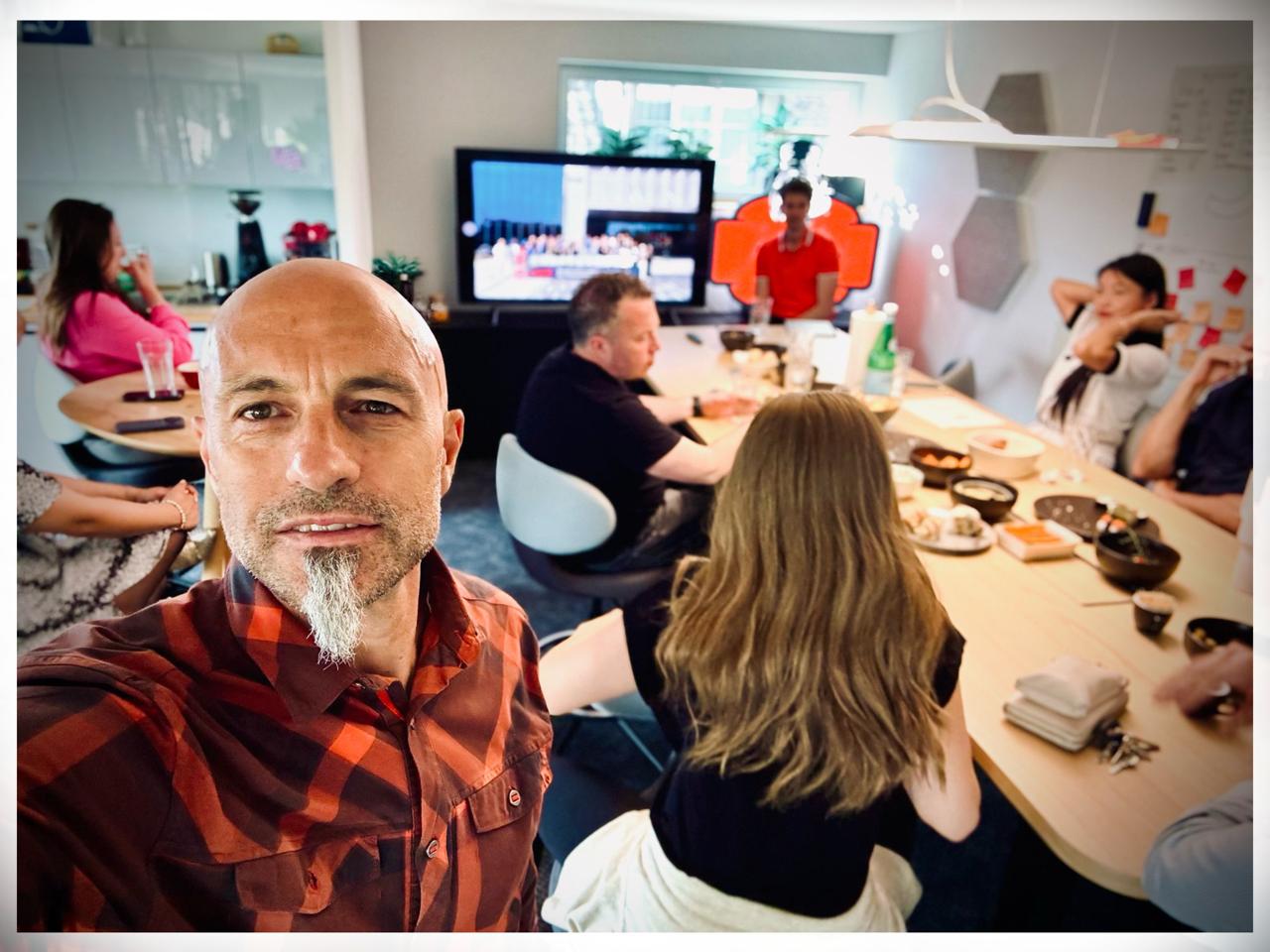
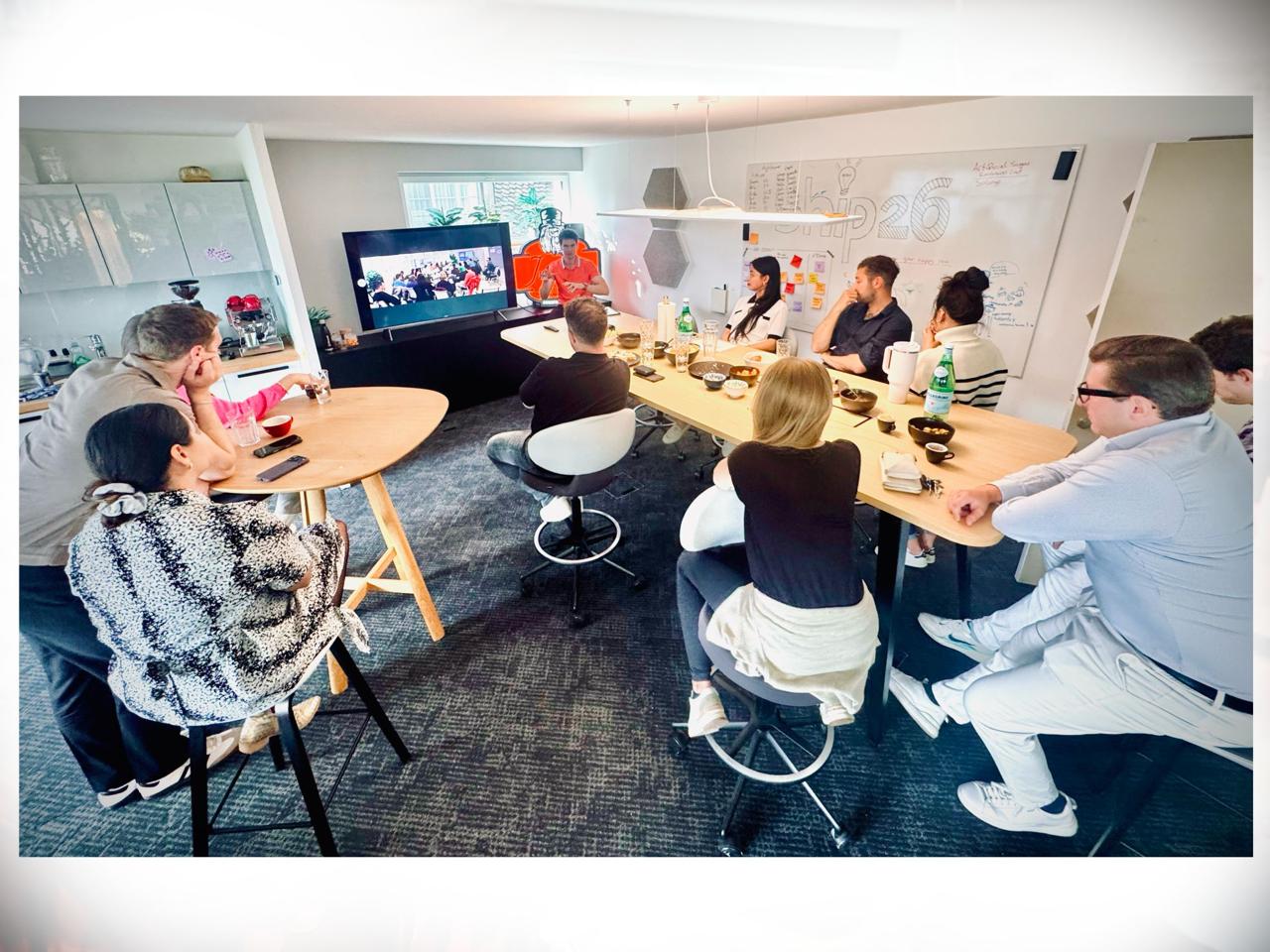
Then the room came alive. Around the table sat a former China expat, a member fluent in Chinese business and political context, someone married to an engineer who had worked there, and a cohort member with an uncle in Chinese medical tourism. What began as a debrief became a genuine group discussion, the whole table understanding, comparing, and accepting differences as it tried to make sense of the world. They corrected, expanded, and pushed back: on how to say Hangzhou, on facts (100 versus 400 years of concrete use in the US), and hardest of all on the politics.
Scale as the thing that explains everything
One number kept resurfacing. Shanghai (27 million) to Hangzhou (12 million) is 180 kilometres with essentially no countryside in between, dense residential high-rises the whole way. China's provinces each match a country's economy: Guangdong close to Canada, Zhejiang close to Mexico, Sichuan close to Switzerland. Every time the conversation turned to surveillance, manufacturing, or education, someone pointed back to scale as the explanation for all of it.
The manufacturing detail landed hard. Take the visit to NIO, with a battery swap in about five minutes instead of a charge and cars with a "movie mode" that drives the suspension and ventilation. Longi solar runs 70 GW of capacity a year from a single company, roughly 25 nuclear plants' worth, at around $80 a panel. The room's read: Europe is losing the quality race now, not only the cost one.
Where the room stopped agreeing
Then Dahua, and the friction got real. Facial and behaviour recognition in "smart classrooms" that track attention. Video you can search by typing "find a man smoking." City-wide camera networks. Safety infrastructure, or control? The table did not converge. Several speakers reached for "you can't apply Western values to Chinese scale," and several others refused to let that stand as a get-out. The disagreement stayed warm and stayed pointed at the same time, which is harder to hold than it sounds.
Part of the answer was self-image. Chinese consumers, the room heard, tend to read the cameras as safety rather than intrusion, and "Made in China" still carries a cheap-goods stigma even though the country makes much of the luxury shelf. The manufacturing ethics went the same way: the "Made in Italy" labelling loophole, where the final assembly step sets the origin regardless of where the parts are made; Chris's own knockoff Loewe shoe; Temu and Shein pricing at production cost. Who owns the quality problem: producer, brand, platform, or buyer? Nobody offered a tidy answer, and nobody pretended to have one.
The one everyone actually wrote down
The sharpest business insight was the quietest. There's a one-to-two-year lag between when an innovation shows up in China and when it reaches Europe, the time it takes to translate, discover, and distribute it. Someone half-joked that the lag was a company in itself: a trading house called Ship26. It got a laugh, and then it didn't, because that is exactly the move the room is built to make. Take a story and ask what to do with it.
The point
The slides mattered less than what the room did with them. People who had lived the subject sharpened a first draft in real time, then turned to what could be built from it.
Ship26 is a curated community of builders with a home on the Limmat in Zürich's old town, at Schifflände 26. The best sessions here are the ones where the people at the table know enough to argue the thing into better shape.